
7 Facial Changes Women Notice Between 35 and 55
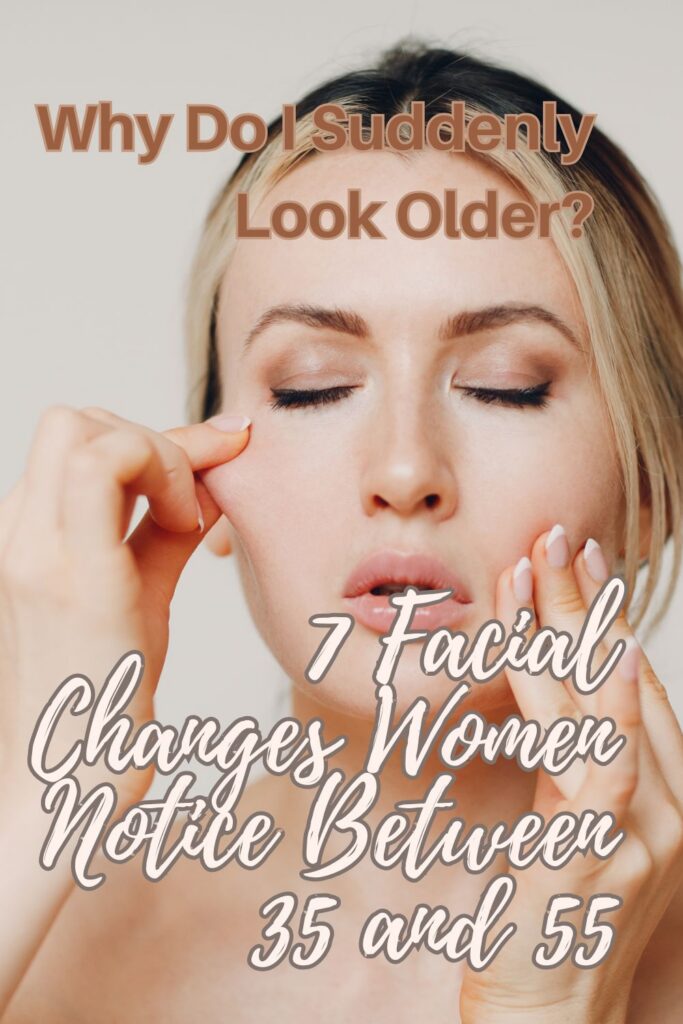
Why Do I Suddenly Look Older? 7 Facial Changes Women Notice Between 35 and 55
There is a moment many women experience somewhere between their mid-30s and 50s.
You look in the mirror and think:
“When did THAT happen?”
It isn’t necessarily a dramatic wrinkle.
It might be that your jawline doesn’t look quite as sharp as it used to. Your eyes look tired even after a good night’s sleep. Your cheeks seem flatter. Your skin doesn’t have the same glow. Makeup suddenly sits differently.
And perhaps the most frustrating part?
You still feel like you. You just don’t quite recognise the face looking back at you.
At London Body Clinic, this is something we hear from women all the time.
The good news is that facial ageing isn’t caused by one single thing — and understanding what has changed is the first step towards choosing the right treatment rather than simply adding filler or treating every line.
1. “My jawline has disappeared”
One of the biggest concerns we hear from women over 40 is:
“I’ve suddenly got jowls.”
The lower face can gradually appear softer as we age. Changes in skin elasticity, facial volume and the underlying structures of the face can all contribute.
This is why treating a changing jawline isn’t necessarily about simply putting filler directly into it.
Depending on the individual, treatments aimed at improving skin quality and firmness may be more appropriate.
At London Body Clinic, options we may discuss include:
Morpheus8 RF microneedling, HIFU, skin boosters, collagen-stimulating treatments and carefully planned dermal filler where appropriate.
The important word is appropriate.
Your treatment should be based on why your lower face has changed.
2. “Why do I look tired when I’m not tired?”
The under-eye area can be one of the first places where facial ageing becomes noticeable.
You might notice:
- hollowness
- fine lines
- crepey skin
- darker shadows
- reduced firmness
- puffiness or bags
And this is exactly why not every under-eye should be filled.
Someone with genuine volume loss may potentially benefit from carefully selected tear-trough treatment, while someone whose main concern is thin or crepey skin may be better suited to treatments focused on skin quality.
Depending on assessment, options may include polynucleotides, skin boosters, PRP, RF microneedling or other regenerative approaches.
Sometimes the best treatment decision is actually not to add volume at all.
3. “My cheeks look flatter”
Youthful faces naturally have areas of contour and support.
Over time, changes in facial fat, skin, bone and connective tissues can alter those contours.
This can create the impression that the face has become flatter or that everything has started moving downwards.
But restoring facial balance doesn’t mean creating huge cheeks.
Modern aesthetic treatment should be about proportion, structure and subtlety.
A well-planned treatment should have people thinking:
“You look really well.”
Not:
“What have you had done?”
4. “My skin suddenly looks dry, dull and crepey”
This one can feel particularly unfair because your skincare routine may not have changed at all.
For some women, perimenopause and menopause coincide with noticeable changes in their skin.
The NHS lists dry and itchy skin among possible menopause and perimenopause symptoms, and NHS-backed research is currently examining issues including dryness, increased wrinkles and other skin changes during this stage of life. nhs.uk
That means the moisturiser that felt perfectly adequate at 32 may not necessarily address everything you’re noticing at 45.
This is where treatments designed around hydration, skin quality and collagen stimulation may become more relevant than simply treating individual wrinkles.
5. “I’ve lost weight… so why do I look older?”
This is something we are seeing increasingly often.
You’ve worked hard, lost weight and feel healthier — but your face suddenly looks different.
Significant or rapid weight loss can leave some people with increased skin laxity because the skin may not fully adapt to the change in body volume. Age, genetics and changes in collagen and elastin also influence how the skin responds. Chelsea Westminster Hospital
You may notice it particularly around the:
cheeks, jawline, neck and under-eye area.
The answer isn’t automatically “more filler”.
For some patients, improving skin quality and encouraging collagen remodelling may form a more appropriate part of the treatment plan.
6. “My neck is ageing faster than my face”
You remembered SPF on your face.
Your neck?
Perhaps not quite as religiously.
The neck is also an area where skin laxity and texture changes can become increasingly noticeable.
Women often come to us saying:
“My face doesn’t bother me. It’s my neck.”
Depending on the degree and type of concern, we may discuss treatments such as Morpheus8, HIFU, skin boosters or other skin-tightening and regenerative approaches.
And sometimes combination treatment is more appropriate than relying on one treatment to do everything.
7. “I don’t want to look 25. I just want to look like me again.”
This may be the most important point in this entire article.
Most of the women we see aren’t trying to erase every line.
They don’t want an entirely different face.
They certainly don’t want everyone at work knowing they’ve had something done.
They say:
“I just want to look fresher.”
And we understand that.
At London Body Clinic, our approach isn’t about chasing youth.
It’s about looking at your face as a whole and asking:
What has actually changed?
Is it volume?
Skin laxity?
Hydration?
Muscle movement?
Collagen loss?
Texture?
Or several things happening together?
Because once we understand that, we can build a treatment plan around you, rather than following whatever treatment happens to be trending on social media.
What treatments can help facial ageing?
There isn’t one universal “best anti-ageing treatment”.
Depending on your concern, age, skin, medical history and desired result, your consultation may include discussion around treatments such as:
Morpheus8 RF microneedling – for concerns involving skin texture and laxity.
HIFU – a non-surgical treatment used in selected patients seeking improvement in areas of skin laxity.
Skin boosters – focused primarily on improving hydration and overall skin quality rather than dramatically changing facial shape.
Polynucleotides – increasingly used in aesthetic practice for skin-quality concerns, particularly delicate areas such as around the eyes.
PRP – uses components derived from your own blood and may be considered as part of a regenerative skin treatment plan.
Dermal fillers – may restore selected areas of lost volume or improve facial balance when clinically appropriate.
Collagen-stimulating treatments – designed to encourage gradual changes rather than simply creating immediate volume.
The right option depends entirely on what we find during consultation.
FAQs: Facial Ageing in Your 30s, 40s and 50s
Why has my face suddenly started ageing at 40?
Facial ageing happens gradually, but changes can become more noticeable around this stage of life. Skin elasticity, facial volume, genetics, lifestyle, sun exposure and hormonal changes may all contribute.
Does perimenopause change your skin?
It can. Skin changes including dryness and itching are recognised among possible perimenopause and menopause symptoms, although experiences vary considerably between women. nhs.uk
Why is my jawline sagging?
Age-related changes in skin elasticity and facial structures can contribute to a softer jawline. Weight changes and genetics can also influence appearance.
Can you tighten a sagging face without surgery?
Non-surgical treatments may improve certain types of mild-to-moderate skin laxity, but they cannot reproduce the results of surgical lifting. A consultation is needed to establish realistic expectations.
Should I get filler for jowls?
Not automatically. Jowling can have several contributing factors, so simply adding filler isn’t appropriate for everyone.
Why do my eyes suddenly look older?
Changes in skin quality, volume, pigmentation and under-eye anatomy can all alter the appearance of the eye area.
What is the best treatment for women over 40?
There isn’t one. The appropriate treatment depends on whether your primary concern is laxity, volume loss, wrinkles, pigmentation, hydration or texture.
Do skin boosters add volume like filler?
Skin boosters are generally used primarily to improve hydration and skin quality rather than create the structural volume associated with traditional dermal fillers.
Can losing weight make your face look older?
For some people, significant weight loss can make existing skin laxity or changes in facial volume more noticeable. Chelsea Westminster Hospital
What helps crepey skin?
Treatment depends on its location and severity. Options may include skincare, sun protection and professional treatments aimed at skin quality or collagen remodelling.
Can Morpheus8 help the jawline and neck?
RF microneedling is used for concerns including skin texture and laxity. Suitability and expected improvement vary between individuals.
Can HIFU help facial sagging?
HIFU may be considered for selected people with skin-laxity concerns, but it isn’t appropriate for every face or every degree of sagging.
How do I know whether I need filler or skin tightening?
This is exactly what a good consultation should determine. Adding volume to a problem primarily caused by laxity may not produce the result you want.
Can I combine aesthetic treatments?
Sometimes. Combination plans can address different components of facial ageing, but treatments should be appropriately spaced and selected according to your individual medical history and skin.
How can I look younger without looking “done”?
The aim doesn’t have to be looking dramatically younger. Subtle treatment planning can focus on skin quality, balance and areas that are specifically bothering you while maintaining your natural facial characteristics.
You don’t need a new face. You need the right plan.
If you’ve reached your 30s, 40s or 50s and feel as though your face has suddenly changed, don’t start by choosing a treatment.
Start by finding out what has changed and why.
At London Body Clinic, we believe the best aesthetic results come from treating the person in front of us — not following a standard injection map or trying to make every woman look the same.
Book a consultation with London Body Clinic and let us assess your skin, facial structure and concerns before recommending the treatments that may be most appropriate for you.
Natural. Considered. Still completely you.