

Cellulite Treatment: What Actually Causes Cellulite and Which Treatment Is Right for You?

If you have cellulite on your thighs, buttocks, hips or legs, you are certainly not alone. Cellulite is incredibly common, affecting the vast majority of women at some point in their lives.
Yet despite being so common, cellulite remains one of the most misunderstood concerns we see in body aesthetics.
One of the biggest misconceptions is that cellulite simply means you have too much fat.
It doesn’t.
Slim women can have cellulite. Athletic women can have cellulite. Cellulite can become more noticeable after weight loss, pregnancy, hormonal changes or as our skin ages.
At London Body Clinic, we believe successful cellulite treatment starts with understanding why the skin looks dimpled in the first place.
That matters because cellulite can involve several different structures beneath the skin. Someone with predominantly loose skin and mild rippling may require a completely different approach from someone with deep, tethered cellulite dimples or pockets of localised fat.
So, before asking, “What is the best cellulite treatment?”, we need to ask a much better question:
“What is creating your cellulite?”
What Is Cellulite?
Cellulite describes the uneven, dimpled or rippled appearance of the skin commonly found across the thighs, buttocks, hips, abdomen and upper legs.
It is often described as orange-peel skin, cottage-cheese skin or dimpled skin.
Underneath the skin sit layers of subcutaneous fat arranged into lobules. Running through this tissue are collagen-rich connective-tissue bands known as fibrous septae.
These structures help connect and support the skin and deeper tissues.
Cellulite develops through a complex interaction between the dermis, subcutaneous fat and fibrous septae. The fibrous structures can create an inward tethering force while the surrounding fatty tissue creates outward pressure.
Imagine a mattress with buttons pulling certain points downwards. The surrounding padding pushes upwards while the button remains tethered down.
A similar mechanical effect can happen underneath cellulite-prone skin, creating the familiar hills, valleys and dimples associated with cellulite.
Is Cellulite Caused by Fat?
Fat can contribute to cellulite, but it isn’t the whole story.
There are superficial and deeper layers of subcutaneous fat beneath the skin. These contain individual fat cells, known as adipocytes, organised into fat lobules.
When these fat cells increase in size, the volume and outward pressure within the tissue can increase, potentially making existing cellulite more noticeable.
However, cellulite also occurs in women who are slim, athletic or have a healthy body weight.
This explains something we regularly tell our clients:
Losing weight and treating cellulite are not necessarily the same thing.
You can lose body fat and still have cellulite because the underlying fibrous bands remain.
Equally, reducing a localised pocket of fat may improve the contour of an area without completely eliminating tethered cellulite dimples.
The Role of Fibrous Tissue in Cellulite
This is where cellulite becomes particularly interesting.
Fibrous septae run through the fatty tissue beneath the skin. Some of these connective-tissue structures tether the skin downwards.
If surrounding tissue pushes upwards while a strong fibrous band continues pulling one point down, a depression or dimple becomes visible.
This is also why simply trying to “burn fat” doesn’t necessarily correct cellulite.
If the problem is predominantly a fibrous tether, reducing fat doesn’t automatically release that tether.
Skin Laxity Can Make Cellulite Look Worse
Another important factor is the quality of the skin itself.
Collagen and elastin provide structure, firmness and elasticity. As we age, our skin can gradually become thinner and less firm.
Significant weight loss can also leave the skin with less support, particularly when a large amount of body fat has been lost.
As skin becomes less firm, irregularities beneath it can become more visible.
A woman may therefore have relatively little excess fat but still have noticeable cellulite because she has a combination of skin laxity, reduced elasticity and underlying fibrous tethering.
This is why assessing cellulite properly is so important.
Why We Don’t Treat Every Cellulite Client the Same Way
At London Body Clinic, our approach begins with looking at what is actually contributing to the appearance of the area.
We may be looking predominantly at:
- Localised subcutaneous fat
- Skin laxity
- Superficial rippling
- Deep tethered dimples
- Fibrous connective tissue
- Reduced skin quality
- Or a combination of several factors
That’s why we offer different technologies and treatment approaches rather than attempting to sell every client exactly the same cellulite treatment.
Radiofrequency (RF) for Cellulite and Skin Tightening
Radiofrequency can be particularly useful when skin laxity and skin texture are contributing to the appearance of cellulite.
RF technology delivers controlled thermal energy into targeted tissue.
This controlled heating can encourage collagen remodelling and improve the appearance of skin firmness and texture.
RF may therefore form part of a cellulite treatment programme where the aim is to improve skin firmness, texture, mild laxity and the appearance of superficial cellulite.
HIFU Body Treatments for Cellulite
High-Intensity Focused Ultrasound, commonly known as HIFU, delivers focused ultrasound energy at controlled depths.
Body HIFU is used within non-surgical body contouring and can be particularly relevant when localised fat and body contour form part of the concern.
However, someone with isolated deep cellulite dimples but very little excess fat may require an entirely different strategy.
Again, assessment comes before treatment.
Laser Lipo for Cellulite and Body Contouring
Laser lipo and low-level laser technologies are another non-surgical body-contouring option.
Rather than assuming every cellulite client needs aggressive fat reduction, we assess whether reducing localised volume and improving body contour is actually appropriate.
Laser lipo may form part of a combination body-contouring programme where localised fatty tissue contributes to an uneven appearance.
However, reducing fat alone will not necessarily correct a deeply tethered cellulite dimple.
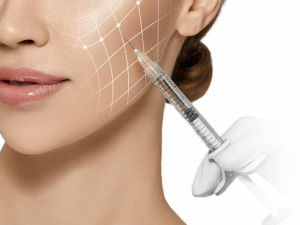
Cellulite Mesotherapy and Injectable Treatments
Injectable approaches are another category used within cellulite management.
Mesotherapy involves delivering carefully selected products into targeted tissue according to the product, indication and treatment protocol.
At London Body Clinic, treatments such as StrikeCell injectable mesotherapy may be considered as part of a personalised cellulite programme where appropriate following consultation.
Injectable cellulite treatments are not all the same, which is why product selection, suitability, contraindications, treatment depth and the tissue being targeted all matter.
Cellulaze and Treatments Targeting Fibrous Bands
For deeper tethered cellulite, addressing the actual fibrous structure may sometimes be more appropriate than simply targeting fat.
Cellulaze is a minimally invasive laser-based cellulite treatment designed to target several structures involved in cellulite, including fibrous septae, fatty tissue and dermal collagen.
Other forms of subcision work more directly by releasing fibrous septal bands responsible for tethering the skin.
This distinction is extremely important.
If a client has several deep, isolated dimples caused predominantly by fibrous tethering, continually treating superficial fat may never adequately address the structural cause.
Why Combination Cellulite Treatments Can Be More Effective
Perhaps the most important principle in cellulite management is:
There isn’t one universal “best cellulite treatment.”
One client may benefit primarily from radiofrequency.
Another may need body contouring.
Another may have fibrous tethering requiring a completely different approach.
Another may benefit most from a carefully planned combination.
For example, a personalised programme might focus on reducing unwanted localised fat first, followed by treatments designed to improve skin firmness, texture and overall contour.
This is why we don’t believe cellulite treatment should begin with choosing a machine.
It should begin with an assessment.
Can You Completely Get Rid of Cellulite?
At London Body Clinic, we believe in setting realistic expectations.
Cellulite is an extremely common anatomical characteristic, and no responsible practitioner should guarantee completely cellulite-free skin forever.
The goal of cellulite treatment is therefore improvement rather than perfection.
The amount of improvement possible will depend on the severity of the cellulite, skin quality, underlying tissue, localised fat, fibrous tethering and the treatment being used.
At London Body Clinic, consultation allows us to assess what may be contributing to your cellulite and discuss which treatment, or combination of treatments, may be appropriate.
Because the question isn’t simply:
“How do we treat cellulite?”
It is:
“Why does your cellulite look the way it does, and which tissue do we actually need to target?”
That is where intelligent cellulite treatment begins.
Cellulite Treatment FAQs
1. What causes cellulite?
Cellulite is caused by a combination of factors involving the skin, subcutaneous fatty tissue and fibrous connective-tissue bands beneath the skin. Genetics, hormones, body composition, skin quality and age may also influence its appearance.
2. Is cellulite just excess fat?
No. Excess subcutaneous fat can make cellulite more noticeable, but cellulite also affects slim and athletic women. Fibrous connective tissue and the structure and quality of the skin are also important.
3. Why do women get cellulite more commonly than men?
Differences in hormones, fat distribution and the structure and orientation of connective tissue beneath the skin are thought to contribute to cellulite being considerably more common in women.
4. Can losing weight get rid of cellulite?
Weight loss may reduce the appearance of cellulite when excess fatty tissue is contributing, but losing weight cannot necessarily release the fibrous bands responsible for individual cellulite dimples.
5. What is the best treatment for cellulite?
There is no single best cellulite treatment for everyone. The most appropriate option depends on whether the main concern involves fibrous tethering, localised fat, skin laxity, superficial texture or a combination of factors.
6. Does radiofrequency help cellulite?
Radiofrequency can be useful for improving the appearance of cellulite, particularly when skin laxity and reduced firmness contribute to uneven skin texture.
7. Can HIFU help cellulite?
HIFU may be considered when localised subcutaneous fat and body contour are contributing to the concern. Whether HIFU is suitable depends on the individual and the type of cellulite being treated.
8. Does laser lipo help cellulite?
Laser lipo may help with body contouring and localised fatty areas that contribute to an uneven appearance. However, reducing fat alone may not correct cellulite caused primarily by deep fibrous tethering.
9. What are fibrous bands in cellulite?
Fibrous septae are collagen-rich connective-tissue structures beneath the skin. Some can tether the skin downwards while surrounding tissue pushes outwards, contributing to the characteristic cellulite dimple.
10. Can cellulite treatments break down fibrous tissue?
Certain treatments specifically target or release fibrous septae. Subcision and some minimally invasive laser-based cellulite treatments are examples. These work differently from treatments primarily designed for fat reduction or skin tightening.
11. What is Cellulaze?
Cellulaze is a minimally invasive laser-based treatment designed to address several structural components associated with cellulite, including fibrous septae, fatty tissue and the skin.
12. Does cellulite get worse with age?
Cellulite can become more noticeable as skin firmness, collagen and elasticity change with age. However, ageing itself is not the sole cause of cellulite.
13. Can cellulite treatment tighten loose skin too?
Some energy-based treatments, particularly radiofrequency, are used to improve skin firmness and texture, making them potentially useful where skin laxity accompanies cellulite.
14. How many cellulite treatments will I need?
The number of treatments required depends on the type and severity of cellulite, the technology or treatment being used and your individual response. Some treatments require a course of sessions, while others may require fewer treatments.
15. Where can I get cellulite treatment in London?
London Body Clinic offers consultations for cellulite and non-surgical body contouring. We assess factors including localised fat, skin laxity, skin quality and cellulite pattern before discussing suitable treatment options.
Ready to Understand What’s Actually Causing Your Cellulite?
Book a cellulite and body contouring consultation at London Body Clinic.
Rather than simply treating what we can see on the surface, we assess the factors that may be contributing to your cellulite and discuss a personalised approach based on your individual body, skin and treatment goals.